
The average domain name cost is around 10–10–20 per year. That said, domain name prices vary depending on factors such as the chosen registrar, registration period, and additional features. You can also get free domains through some hosting providers and limited-time deals. Carefully read to know How Much Does a Domain Name Cost in 2026 + Can I Get One for Free.
Premium domains usually cost more. These names are short, easy to remember, brandable, or include popular keywords. Since they’re in high demand, they often come with a higher price tag. Still, many people see the value in securing a domain that reflects their brand and goals, since a custom domain builds trust and increases credibility.
Table of Contents
So, how much does a domain name cost per year? Here’s a quick look at starting prices for popular domain extensions.
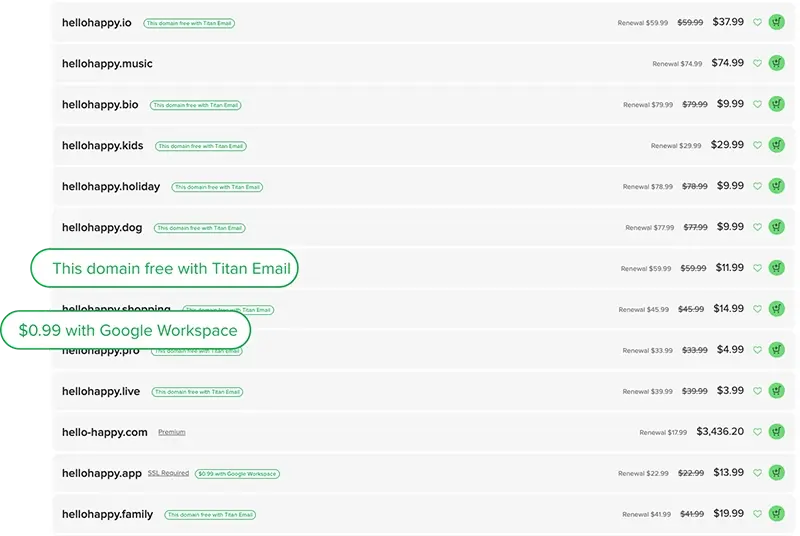
Average Domain Name Cost by Extension (2026)
Below are typical first-year starting prices for common domain extensions. These rates come from major registrars and can vary based on promotions.
| Domain Extension (TLD) | Best For | First‑Year Starting Price |
|---|---|---|
| .com | Universal commercial and personal projects | 2.99–12.99 |
| .net | Tech or network-related projects | 11.99–15.99 |
| .org | Non‑profits and communities | 7.99–12.99 |
| .online | Global digital or service presence | 0.99–4.99 |
| .blog | Personal blogging or content sites | 1.99–6.99 |
| .shop | Ecommerce and online stores | 0.99–3.99 |
| .tech | Tech-related startups or projects | 5.99–9.99 |
| .xyz | Innovators and modern brands | 1.99–5.99 |
| .site | General websites and portfolios | 0.99–4.99 |
| .co | Innovative startups or company websites | 27.99–35.99 |
| .space | Creative, niche-themed and scientific websites | 0.99–3.99 |
| .store | Online retail and product sales | 1.99–8.99 |
| .io | Tech startups and gaming | 30.00–50.00 |
💡 Pro tip: Newer extensions like .online, .shop, and .xyz often have very low first-year promotional rates. However, always check renewal prices before buying.
How Much Should You Pay for a Domain?
It depends on the type of domain you choose. For most popular domain extensions like .com, .net, or .org, prices usually cost between 10–10–20/year. Newer options, such as .online, .shop, or .xyz, can start even lower with promotional first-year rates, though renewals might be higher.
Many hosting providers offer a free domain for the first year when you purchase an annual web hosting plan. This is a great option if you’re just starting a website and want to keep costs low.
Consider paying more than $20/year if you want to secure a premium domain containing unique keywords for your brand. Premium options tend to cost more because they’re more memorable and have good visibility in search engines.
Prices can also go up if your registrar offers advanced features and add-ons like WHOIS privacy protection, website builders, and premium support.
What Affects Domain Pricing?
Let’s explore the six factors that affect domain name costs. Keep in mind that we’re only focusing on non-premium custom domains, which are readily available to purchase on domain registrars.
1. Domain Extension (TLD)
Also known as top-level domains (TLDs), domain extensions are the last part of a domain name. For example, in google.com, “google” is the address and .com is the extension.
There are three main types of TLDs:
- Generic (gTLD). Available for anyone without any geographical restrictions. Common examples include .com, .net, .org, .shop, and .tech.
- Sponsored (sTLD). Only eligible users can register sponsored TLDs. For example, .gov is for US government agencies, while .edu is for educational institutions.
- Country-code (ccTLD). .us, .uk, .in, .fr, and .jp represent specific regions. Users often need a registered address to buy one.
gTLDs are usually the most expensive across registrars due to their global recognition, strong demand, and reputation for trust. That’s why opting for newer extensions like .xyz, .cloud, or .pro can be a more affordable alternative, especially if your website doesn’t require a specific TLD.
2. Domain Registrar Fees
Domain registrars have different fee structures. Some offer significant discounts on first-year registrations to attract new users, while others stick to fixed pricing with a higher starting cost.
One way to cut your domain registration cost is by choosing a hosting plan that includes a free domain name. For credibility and security, always register your domain through an ICANN-accredited registrar.
3. Domain Privacy Protection
When registering a domain, WHOIS stores your personal details like phone number, home address, domain name, IP address, and expiration date. Since this information is public, your site becomes vulnerable to identity theft, email phishing, and spam.
Domain privacy protection keeps your data hidden in the WHOIS directory. It usually costs between 10–10–20/year, but you can get it for free with many hosting plans.
Here’s how to activate domain privacy protection at most registrars:
- Access Domains → Domain Portfolio from your dashboard.
- Click Manage next to your domain name.
- Toggle on the Privacy Protection option.
Run your domain name through a WHOIS domain lookup to ensure your contact details aren’t public.
Keep in mind that certain domain extensions, such as .us and .uk, have privacy protection limitations due to regional regulations. EU citizens also have their personal data redacted for all TLDs by default, thanks to the General Data Protection Regulation (GDPR).
4. Domain Registration Duration
Most domain registrars offer a minimum registration period of one year. However, a longer duration often comes with discounts and protects you from yearly price hikes.
For example, many registrars give a significant discount for the first year when you register a .com domain for three years. Discounts vary based on the TLD.
5. Domain Transfer Fees
Domain transfer refers to the process of migrating a domain name to another registrar, usually for better support, cheaper renewal pricing, or simpler management.
Before transferring a domain, compare the transfer fees, requirements, and renewal costs. Some providers offer free domain transfers but charge for setup and renewal for the first year. In some cases, transfer fees are extremely low, but they don’t cover renewal costs.
Consider any additional services you need, such as WHOIS domain privacy and email services, as they can impact the overall cost.
6. Custom Email Accounts
A custom email address that represents your business name helps boost brand recognition. For instance, using name@yourdomain.com over name@gmail.com will make you appear more professional.
Creating a professional email account via a domain registrar or email service provider requires additional fees. Luckily, some web hosts bundle free custom email with hosting plans.
How to Get a Free Domain Name
Here are a few ways you can register a domain name for free:
- Choose a hosting plan that includes a free domain – Many annual hosting packages offer this perk.
- Use a website builder that bundles free domain registration with its plan.
- Look for registrar promotions that offer free registration for specific TLDs.
- Use a subdomain (for example,
yourname.wordpress.com) if you only need a basic, no-cost option.
That said, be cautious with free lifetime domain offers. They usually come with limited security features, little to no support, and can make your website look unprofessional.
Instead, pick the option that works best for you. If you’re launching a full website, a hosting or website builder plan with a free domain is probably your best bet. But if it’s just something temporary, a subdomain might do the trick.
Are There Any Hidden Costs Associated with Owning a Domain Name?
Yes. Besides the initial registration, there are a few extra costs you should plan for:
- Renewal fees. Domains are billed annually, and the renewal price tends to be higher than the first-year promo rate.
- Domain privacy protection. Not all registrars offer this essential service for free.
- Premium add-ons. Depending on your registrar, you may pay extra for email hosting, SSL certificates, or advanced DNS management.
Not all of these services are necessary, but it’s worth keeping them in mind when budgeting to avoid surprises.
Why Your Website Needs a Unique Domain Name
Your website needs a unique domain name because it’s the foundation of your online identity. A custom domain makes your site easier to find, builds trust with visitors, and sets you apart from competitors still relying on free subdomains.
A unique domain also makes your brand more memorable, especially when paired with a TLD that matches your niche. For example, using a .store domain for an online shop signals its purpose instantly, while choosing .org for a non-profit highlights credibility.
When deciding how to choose the right domain name, aim for one that’s simple, relevant, and aligned with your goals. This turns your domain into a long-term asset that strengthens your brand over time.
Why You Should Register Multiple Domains
You can launch a website with just one domain, but registering multiple domains helps protect your brand identity. By claiming domain names and TLDs similar to your main one, you reduce the risk of cybersquatting and phishing attacks.
For example, a brand might use example.com as the main address but also claim example.net and example.org to prevent competitors from taking them. This practice also helps you capture misspellings or variations of your domain.
Many registrars make it easy to secure multiple domains by bundling popular TLDs when you check for availability. Choosing a bundle can save you money upfront and lets you manage all your domains conveniently under a single account.
How to Buy a Domain Name
Registering a new domain follows similar steps across most registrars:
- Check availability – Use the registrar’s search tool and consider variations if your first choice is taken.
- Select registration period – Choose between 1–10 years.
- Add optional services – Hosting, email, privacy protection, etc.
- Provide billing information – Accurate details are required for ICANN compliance.
- Complete payment – You’ll receive a confirmation email and may need to verify your contact details.
The process of securing an already registered domain can be more involved and often requires backordering or negotiating with the current owner. The same goes for redeeming an expired domain, which comes with time limits and additional fees during the redemption period.
How to Buy a Registered Domain
Buying a registered domain means purchasing a web address that’s already owned by someone else. Start by checking what the domain is currently used for. If it points to an active website, the owner may not be willing to sell. Unused or parked domains are your best bet, often listed through domain resellers or marketplaces like Sedo and Flippa.
Once you’ve identified a potential domain, research its value by comparing prices of similar domains. Then, find the owner’s contact information using a WHOIS lookup tool and reach out to negotiate a price.
How to Redeem an Expired Domain Name
When a domain name expires, the owner might need to pay additional fees to redeem it. The amount depends on the domain’s lifecycle and TLD.
- Renewal grace period (up to 30 days) – Renew at the standard fee.
- Redemption period (30 days) – A redemption fee applies on top of renewal cost.
- Pending delete (about 5 days) – No changes or redemptions possible.
- Available for public registration – First-come, first-served.
To avoid losing your domain, activate the auto-renewal feature for each registered domain.
How to Get the Best Deal
The best way to secure a domain without overspending is to plan ahead. Here are some tips to help you find a good domain name at the right price:
- Compare registrars – Prices vary significantly between them.
- Take advantage of hosting bundles – Save registration cost for the first year.
- Use a domain name generator – Helps brainstorm unique, available names.
- Consider alternative TLDs – If .com is expensive, try .co or .io.
- Watch for first-year promotions – Many registrars run limited-time deals.
A domain name is a great way to invest in your online presence, and it doesn’t have to cost a fortune. By comparing options, using smart tools, and choosing the right plan, you can register a domain relevant to your brand and target audience while keeping expenses under control.
Can I Negotiate the Price of a Domain Name?
You can only negotiate a domain’s price if you’re buying it directly from its current owner. This applies to premium domains already registered and listed for resale on marketplaces or by brokers. In these cases, the final price usually depends on demand, domain length, and keyword relevance.
Domain registrars, on the other hand, offer fixed prices for standard TLDs and services like privacy protection, leaving no room for negotiation.
Can I Buy a Domain Name for a One-Time Fee?
No. Domain names are leased, so you have to pay to register and renew them periodically. Most registrars let you register a domain for 1–10 years at a time. As long as you keep up with renewal fees, you can maintain ownership indefinitely.
Enable auto-renewal from the start so you don’t risk losing your domain. Also, check renewal fees before committing, since they may increase over time.
Some hosting providers advertise lifetime domains, but these usually just bundle renewals with a hosting plan. Keep in mind these offers typically have restrictions and aren’t truly permanent.
You may like to read:
Here are three internal link suggestions using variations of the target topic:
- How Much Does a WordPress Website Cost in UAE? Full Business Breakdown
- Best Websites to Learn Digital Marketing for Free (2026 Guide)
- Free Hosting Platforms: A Web Design Student’s Guide by LearnitPedia Technologies
For verified domain registration policies and accredited registrar lists, refer to the official ICANN website:
ICANN.org – Accredited Registrars (Replace with actual live URL)
Final Verdict: How Much Should You Really Spend?
So, what is the final answer to how much a domain name costs in 2026?
- Average cost: 10–20 per year for most standard TLDs like .com and .net.
- Budget option: 1–5 per year for newer TLDs like .online, .shop, or .xyz (first year).
- Premium names: 100–10,000+ depending on demand and keywords.
- Free option: Available with annual hosting plans or subdomains (with trade-offs).
For most beginners, spending 10–10–15 on a .com domain is the safest and most credible choice. If you are on a tight budget, start with a promotional .online or .xyz domain for under $3. Just remember to check renewal rates before you buy.
A domain name is a small investment that pays off in trust, branding, and search engine visibility. Do not overpay, but also do not settle for a free subdomain if you want to be taken seriously.
Call to Action
What is the most you have ever paid for a domain name? Share your experience in the comments below – your story might help someone else avoid overpaying.
If you found this breakdown helpful, share it with a friend who is starting their first website. And do not forget to subscribe to our newsletter for weekly web hosting and domain tips delivered straight to your inbox.
To summarize, the average domain name cost in 2026 ranges from 10–20 per year for standard extensions like .com, while newer options like .online can cost under $1 for the first year. Domain pricing depends on six key factors: TLD choice, registrar fees, privacy protection, registration duration, transfer fees, and custom email accounts. You can also get a free domain through hosting plans or website builders. Always check renewal prices and hidden fees before buying, and enable auto-renewal to protect your online identity.