
In 2026, as SEO strategies evolve with algorithm updates and shifting digital behavior, understanding the difference between external links vs backlinks has become more urgent than ever for content creators, marketers, and website owners. Recent search industry discussions highlight that link signals are still a cornerstone of ranking, but confusion persists over terminology and strategic application. This article clarifies what are external links, backlinks explained, and the difference between backlink and external link with the most recent context from leading SEO authorities.
This matters now because Google continues to refine how link equity, trust, and relevancy signals influence ranking, while publishers and SEO teams are recalibrating strategies for 2026. Whether you manage a news site, a blog on technology like the Apple AirTag 2, or an investment resource such as the CoreWeave stock (CRWV) analysis, grasping link fundamentals is foundational to digital success.
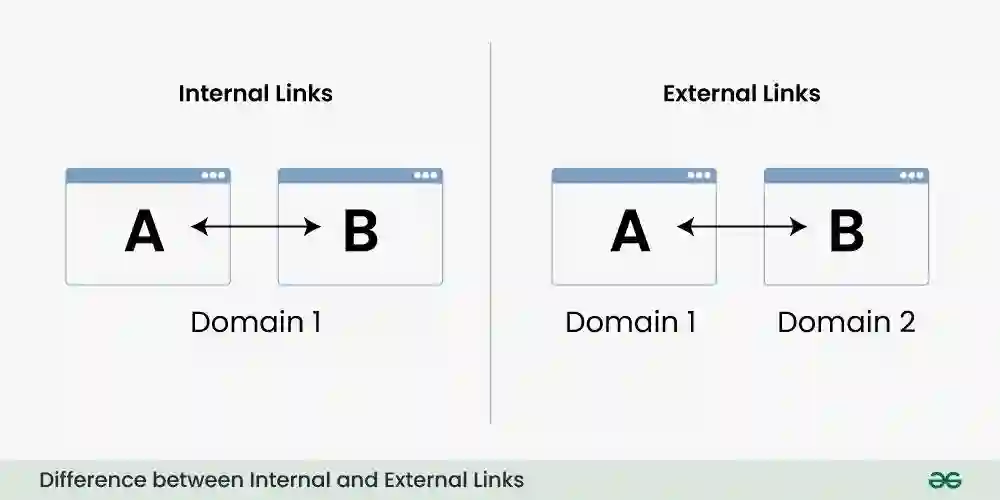
Table of Contents
What Are External Links?
An external link is a hyperlink pointing from one domain to a separate domain. In SEO, external links can be outbound or inbound from the perspective of the linking site.
Official definition: External links connect content across domains. They help users discover resources and help search engines understand relationships between websites and topics. According to SEMrush, external links are links on your site that point to a different domain, and they influence SEO by passing context and potential authority signals. (see https://www.semrush.com/blog/external-links/)
External Links vs Internal Links
External links differ from internal links, which connect pages within the same website. Internal linking helps with site navigation and indexing. External links, by contrast, extend relevance and resource networks beyond your domain.
For example, linking from your article to trusted resources like Mailchimp’s backlink glossary or Wikipedia’s page on backlinks (see https://mailchimp.com/marketing-glossary/backlinks/, https://en.wikipedia.org/wiki/Backlink) are external links that provide additional context and authoritativeness to readers.
Types of External Links
External links include:
- Outbound links: Your site linking out to authoritative content (e.g., SEO guides, academic research).
- Inbound links (Backlinks): Other sites linking to your content — these are discussed in depth below.
External links can be further classified by attributes such as nofollow, sponsored, and UGC (user generated content), which instruct search engines whether to treat the link as an endorsement or pass any SEO value.
For contextual examples of how external links are used in digital content, see SEO resources like Moz on external links (https://moz.com/learn/seo/external-link) or Quora discussions about external link examples (https://www.quora.com/What-is-external-link-What-are-some-examples-of-external-link-How-can-I-create-an-external-link-Please-answer).
Why External Links Matter for SEO
External links matter because they:
- Connect users to additional authoritative context.
- Signal topical connections across the web.
- Support user experience by citing sources or tools.
- Provide search engines with a map of content relationships.
For example, a guide on top cybersecurity certifications for Americans may cite external educational sources to support claims, enhancing trust and utility: https://learnitpedia.com/top-cybersecurity-certifications-for-americans/
What Is a Backlink?
A backlink (also known as an inbound link) is an external hyperlink that points to your website from another domain. Backlinks are one of the most important off-page SEO ranking factors, as corroborated by industry leaders like Backlinko and Wikipedia. (see https://backlinko.com/hub/seo/backlinks, https://en.wikipedia.org/wiki/Backlink)
Backlinks Explained
When another website links to your content, that is a backlink. Search engines interpret backlinks as votes of confidence, suggesting that your content is valuable, relevant, and trusted in its context. However, not all backlinks are equal: quality, relevance, and authority matter more than sheer volume.
Backlinks help:
- Drive referral traffic from other sites.
- Increase visibility in search engine results pages (SERPs).
- Improve domain authority and topical authority over time.
Mailchimp’s glossary notes that backlinks are critical to SEO because they help search engines like Google determine the popularity and relevance of content. (https://mailchimp.com/marketing-glossary/backlinks/)
Types of Backlinks
Backlinks can vary by their attributes and source:
- Editorial backlinks: Natural links from high-authority sites that cite your content.
- Guest post backlinks: Links from articles you publish on other sites.
- Directory or profile backlinks: Links from listings or profiles, usually lower value.
- Comment backlinks: From blog comments or forums, often low value and sometimes nofollowed.
The quality of backlinks matters far more than the quantity. A single backlink from an authoritative and relevant domain can create more SEO value than dozens of low-quality links.
External Links vs Backlinks: Core Differences
Understanding external links vs backlinks is key to building a sound SEO strategy. While they are related concepts, they operate from different perspectives within the linking ecosystem.
| Feature | External Link | Backlink |
|---|---|---|
| Direction | A link from your site to another domain | A link from another domain to your site |
| SEO Role | Helps provide context and authority to your content | Helps improve your site’s authority and ranking |
| Control | Fully controlled by you | Controlled by the linking site |
| SEO Value | Adds resource value; limited direct ranking influence | Major ranking signal for Google and search engines |
| Examples | Your blog linking to Wikipedia | Another blog linking to your article |
What this difference means is that external links enhance content from the perspective of your own page, while backlinks enhance your site’s authority in the eyes of search engines.
Why This Difference Matters Now
In 2026, Google’s evolving algorithms continue to refine how link equity and signals are interpreted. The latest industry signals emphasize:
- Intent and context over raw link counts.
- Relevance of linking domains and anchor text.
- User experience and semantic associations across content networks.
At the same time, search engines are placing stronger emphasis on meaningful connections between content — not just sheer backlink volume. Understanding the strategic differences between external links vs backlinks is now imperative for publishers, SEO practitioners, and digital marketers.
For example, linking internally to related posts such as the Microsoft Outlook emergency update news analysis (https://learnitpedia.com/microsoft-outlook-emergency-update/) or the Apple AirTag 2 review (https://learnitpedia.com/apples-new-airtag-2/) strengthens your topical footprint and keeps users engaged longer — signals that indirectly support SEO.
How External Links Influence SEO
Search Engine Interpretation
Search engines view external links on your page as references that:
- Contextualize your content topic.
- Provide users with pathways to learn more.
- Associate your content with a broader web of knowledge.
However, external links do not directly pass SEO ranking authority to your site. Instead, they support the perception of content quality and relevance.
Best Practices for External Linking
To maximize the positive impact of external links:
- Link to authoritative, trusted sources (e.g., Wikipedia, Copypress, SEMrush).
- Use descriptive anchor text to clarify the linked topic.
- Avoid linking excessively to low-quality or irrelevant domains.
- Ensure links open in a new tab to retain user engagement.
For a primer on KPI examples in digital marketing that include link performance metrics, see Klipfolio’s digital marketing resources: https://www.klipfolio.com/resources/kpi-examples/digital-marketing/external-links
How Backlinks Influence SEO
Backlinks remain one of the strongest off-page SEO signals. According to Backlinko’s SEO hub:
- The number and quality of backlinks are consistently correlated with higher search rankings.
- Sites that earn backlinks from high authority pages tend to achieve more organic visibility. (https://backlinko.com/hub/seo/backlinks)
Why Backlinks Are Powerful
Backlinks help search engines understand:
- That your content is referenced and valued by other sites.
- Your site’s position within a topical network.
- The trustworthiness and relevance of your content.
This impacts rankings significantly because backlinks serve as endorsements in the web’s citation network.
Earning High-Value Backlinks
Effective backlink strategies include:
- Publishing original research or insights that others want to cite.
- Guest blogging on authoritative publications.
- Creating comprehensive resources that attract natural citation.
- Collaborating with industry experts and news sites.
A robust backlink profile is a cornerstone of advanced SEO link building strategies.
Difference Between Backlink and External Link: Quick FAQs
What’s the difference between a backlink and an external link?
A backlink is a link coming into your site from another domain, while an external link is a link going out from your site to another domain. Both play roles in SEO, but backlinks are stronger ranking signals.
Do external links help SEO?
Yes, external links help by enriching content context and providing user value, but they do not directly increase domain authority the way backlinks can.
Are all backlinks beneficial?
Not necessarily. High-quality backlinks from relevant, authoritative domains are beneficial, but spammy or irrelevant backlinks can harm SEO performance.
How can I check backlinks?
Tools like SEMrush, Moz, Ahrefs, and Search Console provide backlink analysis to assess link profiles and guide optimization.
You may be interested in:


Advanced SEO Insights: Strategic Use of Links
In modern SEO, links are not just binary signals; they interact with content quality, topical breadth, and user experience. Effective link strategies include:
Topic Clusters and Internal Linking
Linking to related internal content helps search engines understand topic breadth and depth. For example:
- Link to your article on best AI tools for students in the USA to demonstrate breadth of technology coverage: https://learnitpedia.com/best-ai-tools-for-students-in-the-usa/
External Link Optimization
Link to high-authority industry resources when citing definitions, trends, or standards. For example:
- Copypress on external links vs backlinks (https://www.copypress.com/kb/content-marketing/external-links-vs-backlinks/)
- SEMrush external link guide (https://www.semrush.com/blog/external-links/)
- Moz external link overview (https://moz.com/learn/seo/external-link)
Anchor Text Best Practices
Use anchor text that is:
- Descriptive and relevant.
- Not overly optimized with exact match keywords.
- Natural and beneficial to readers.
This helps search engines interpret the linked content’s relevance.
What This Means for Content Strategy in 2026
Link Signals Are Evolving
Search engines are moving toward a semantic understanding of content networks. External links and backlinks are becoming part of broader content relationship graphs, where:
- Context matters as much as authority.
- Topical connectedness improves relevancy signals.
- User engagement metrics (time on page, scroll depth) interact with link signals.
This makes it imperative for SEO teams to build holistic content strategies rather than focusing solely on link accumulation.
Integration With Other Signals
Link signals intersect with:
- On-page SEO (keyword usage, structured data).
- User experience (readability, mobile speed).
- Freshness signals (recent updates, topical relevance).
Google Discover and Google News optimization favor content that:
- Is timely and linked to authoritative sources.
- Uses clear internal and external link structures.
- Meets user intent with concise explanations and actionable insight.
Link Quality vs Quantity: What SEO Professionals Are Saying
Industry data shows that quality trumps quantity in 2026 link building. A handful of high-trust backlinks from relevant domains outperform hundreds of low-quality backlinks.
According to SEO authorities:
- Trust and topical relevance are essential.
- Balance of external links and backlinks improves perceived authority.
- Search engines weigh link context heavily in ranking decisions.
This signals that smart link strategy, not sheer volume, determines SEO success.
Integrating External Links and Backlinks Into Your SEO Plan
Achieve SEO impact by:
- Mapping internal content clusters and linking between related posts.
- Citing authoritative external resources to support claims.
- Earning backlinks through high-value content and outreach.
- Monitoring link profiles with tools like Moz and SEMrush.
- Aligning link strategy with user intent, not just search rankings.
This integrated approach supports discoverability, user engagement, and long-term organic visibility.
What to Watch Next: Link Signals in 2026
In the coming months and years:
- Search engines may refine how link attributes (nofollow, sponsored, UGC) impact ranking.
- AI-driven content analysis may place more emphasis on content networks and semantic links.
- Link signals may integrate more deeply with behavioral metrics.
Staying current with official SEO research and updates from search engine forums remains crucial.
Conclusion: External Links vs Backlinks
Understanding External Links vs Backlinks is no longer optional — it is a foundational element of modern SEO. External links enrich content and provide users with context, while backlinks remain a powerful driver of authority and visibility in search results.
Strategically balancing these link types, integrating them with topical content, and aligning them with user intent can dramatically improve a site’s performance across search engines and in news discovery platforms.
By mastering the difference between backlink and external link, content teams and SEO professionals can ensure that their link building and content strategies are effective, Google-friendly, and future-proofed for 2026 and beyond.
Internal References
- Best AI tools for students in the USA: https://learnitpedia.com/best-ai-tools-for-students-in-the-usa/
- Apple’s New AirTag 2: https://learnitpedia.com/apples-new-airtag-2/
- CoreWeave Stock (CRWV) comprehensive analysis: https://learnitpedia.com/coreweave-stock-crwv-a-comprehensive-analysis/
- Microsoft Outlook emergency update: https://learnitpedia.com/microsoft-outlook-emergency-update/
- Top cybersecurity certifications for Americans: https://learnitpedia.com/top-cybersecurity-certifications-for-americans/
External Authority Links
- Copypress on external links vs backlinks: https://www.copypress.com/kb/content-marketing/external-links-vs-backlinks/
- Mailchimp glossary of backlinks: https://mailchimp.com/marketing-glossary/backlinks/
- Backlinko SEO backlinks hub: https://backlinko.com/hub/seo/backlinks
- Wikipedia on backlinks: https://en.wikipedia.org/wiki/Backlink
- SEMrush on external links: https://www.semrush.com/blog/external-links/
- SEObility external link overview: https://www.seobility.net/en/wiki/External_Links
- Quora discussion on external links: https://www.quora.com/What-is-external-link-What-are-some-examples-of-external-link-How-can-I-create-an-external-link-Please-answer
- Klipfolio digital marketing link KPIs: https://www.klipfolio.com/resources/kpi-examples/digital-marketing/external-links
- Moz learn SEO external link guide: https://moz.com/learn/seo/external-link